

What the Bible and Lutherans teach
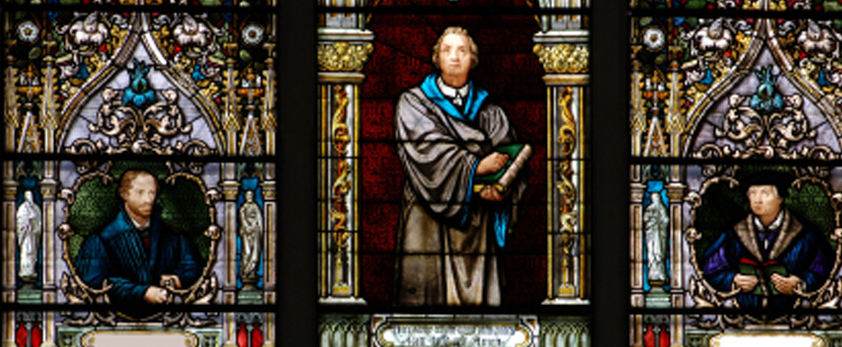
Nearly 500 years ago, the Christian church was corrupted by many false teachings. A man named Martin Luther led people back to the teachings of the Bible. His work, and that of his friends, is called the Reformation. Through Luther God restored the church to purity of doctrine and a new life of faith in Christ.
The doctrines of the Lutheran Church are not new. They are the teachings of the Bible. Thus the Lutheran Church is not a new church. It is not a sect or cult. It is a church whose teaching is based on the words written by the prophets of the Old Testament and the apostles of the New Testament. The Bible tells us about Jesus Christ.
The teachings of the Lutheran Church are those of the original, ancient church of the apostles and early Christians.
The Bible
The Bible and Lutherans teach that the Bible is the true word of God. It is inspired by the Holy Spirit. This means that God breathed into the writers the exact thoughts and words they were to write. As a result every statement in the Bible is the truth. One part of the Bible explains another part. It is the only guideline for the faith and life of Christians. We are to read and study it diligently. It clearly teaches all we need to know in order to obtain our eternal salvation.
2 Peter 1:21; 1 Corinthians 2:13; 2 Timothy 3:16; 2 Timothy 3:15; Luke 11:28; John 5:39; John 17:13-17
Triune God
The Bible and Lutherans teach that there is only one true God. This God is invisible, holy, eternal, and has all power and wisdom. In the Bible God reveals himself as three persons—Father, Son, and Holy Spirit. This is why he is called “Triune.” These three persons in one God are all God. They are equal in power, glory, and in every other quality. To deny or ignore one person is to deny all of them. It is God who created, redeemed, and sanctified us.
Deuteronomy 6:4; Matthew 28:19; John 5:23; Genesis 1:1; 1 John 2:2; Romans 15:13
Man and Woman
The Bible and Lutherans teach that men and women are a special creation of God. The first man was created from the dust of the earth. The first woman was made from the rib of man. They were created in God’s image. This means that they were without sin and had a perfect knowledge of God. That image was destroyed when Adam and Eve first sinned. People have a soul which no other creature has. God gave us rule over all of his creation. Human beings have a free will in works of this life. But only the Holy Spirit, working through God’s Word, can lead a person to love God.
Genesis 2:7; Genesis 2:22; Genesis 1:26; Ephesians 4:24; Colossians 3:10; 1 Corinthians 2:14
God the Father
The Bible and Lutherans teach that God the Father is one of the three persons who are the Triune God. God is a spirit. This means that he cannot be seen or confined to one place. He is called Father because he is the Father of Jesus Christ and of all who believe in Jesus. He has created all things. He is holy, loving, and just. He continues to take care of all creation and all human beings.
Matthew 28:19; John 4:24; John 20:17; Leviticus 19:2; Malachi 2:10; Exodus 34:6,7; Romans 8:32
Creation
The Bible and Lutherans teach that at the beginning of time God created heaven and earth and all creatures. He did this in six days. He spoke his almighty word to create all things. He made everything out of nothing. But man and woman are God’s special creation.
Genesis 1:1; Genesis 1:31; Exodus 20:11; Psalm 33:6,9; Psalm 124:8; Mark 10:6; Hebrews 11:3
God’s law
The Bible and Lutherans teach that God wrote his law in people’s hearts at creation. The human conscience bears witness to that law. The knowledge of the law was blurred in people’s hearts by sin. God repeated his law in the Ten Commandments. God’s law demands obedience in our thoughts, speech, and actions. It condemns all who sin. Therefore no one can be saved by keeping the law. God’s law serves to show us our sins, to warn us of God’s anger against sin, and to guide us in our Christian life.
Deuteronomy 10:4; Matthew 5:48; John 1:17; Romans 7:7; Romans 3:22,23; Romans 3:20; James 2:10; Psalm 119:9
Sin
The Bible and Lutherans teach that the first man and woman lost the image of God when they gave in to the temptation of Satan and disobeyed God’s command. This brought on them the judgment of God. Since that time all people are conceived and born in sin, desire to do what is evil, and are dead spiritually. Therefore, we are unable to reconcile ourselves to God by our own efforts and deeds.
Genesis 2:17; Psalm 51:5; Ephesians 2:1; John 3:6; Psalm 5:4; Romans 5:12; 1 John 3:4; Romans 8:7,8
The gospel
The Bible and Lutherans teach the gospel. The message of the gospel is the good news that a loving God sent Jesus Christ to take away the sins of all people. This gospel freely offers to all sinners the righteousness that is found in Jesus. God offers and gives eternal life and salvation to all those who believe in the gospel promises.
John 1:17; Romans 1:16; John 3:16; Colossians 2:13; Luke 2:10,11; Ezekiel 33:11
Jesus Christ
The Bible and Lutherans teach that Jesus Christ is the Savior of everyone. He is the eternal Son of God, equal to the Father and the Holy Spirit. He is also the son of the Virgin Mary. He became man to redeem all people. Taking our place, he lived a perfect life keeping the law of God for us. He also died as our innocent substitute on the cross to pay a price sufficient for everyone’s sin. After rising from the dead, Jesus ascended into heaven. On the Last Day he will judge all the people who are still living and those whom he will raise from the dead.
1 John 5:20; Matthew 1:23; Ephesians 1:7; Galatians 3:13; Hebrews 4:15; Romans 1:4; Acts 10:42
Redemption
The Bible and Lutherans teach that Jesus, who is both God and man,humbled himself by becoming a man and dying on the cross. He did this to redeem all people from the judgment for sin, the fear of death, and the power of the devil. He fulfilled the law perfectly and took on himself the guilt of all our sins. He ransomed us by the sacrifice of his life on the cross. God has looked on Jesus’ death as our death for sin. The resurrection of Jesus is proof that God has accepted what Jesus did as payment for the sins of all people.
Matthew 5:17; Romans 5:19; Isaiah 53:6; Matthew 20:28; 2 Corinthians 5:21; Ephesians 1:7; 2 Timothy 1:10
Justification
The Bible and Lutherans teach that God judged all sinners righteous in his sight when Jesus Christ died on the cross for us. God declared everyone free from the guilt and punishment owed for our sins. The sinner receives this free gift of forgiveness, not by doing good deeds, but only by faith. A person is justified when he or she believes in Christ and his redemptive work. It is a gift from God.
Ephesians 2:8,9; 2 Corinthians 5:19; Romans 3:22-24; Romans 3:28; Romans 4:5; Mark 16:16
Holy Spirit
The Bible and Lutherans teach that the Holy Spirit is true God equal to God the Father and God the Son. He has names and characteristics which belong only to God. The Holy Spirit creates faith in our hearts through the gospel. He also keeps us in the faith and motivates us to do good works.
Acts 5:3,4; 2 Corinthians 13:14; Psalm 139:7,8; Job 33:4; Titus 3:5; Ephesians 3:16; Galatians 5:24,25
Conversion
The Bible and Lutherans teach that the Holy Spirit causes the heart to trust in Jesus as its Savior. The Holy Spirit creates and maintains faith by means of the gospel in God’s Word and the Sacraments of Holy Baptism and Holy Communion. We believe, therefore, that our conversion is not our work. It is entirely the work of God’s grace. Rejection of the gospel is, however, entirely our own fault.
1 Corinthians 6:11; John 17:17; 2 Thessalonians 2:13,14; Romans 10:17; Acts 2:38; Acts 15:3; Acts 7:51
Saved through grace
The Bible and Lutherans teach that already before the world was created, God chose those individuals whom he would in time convert through the gospel and preserve in the faith to eternal life. This choosing is in no way caused by qualities or actions God had foreseen in the people whom he chose. This shows how completely salvation is ours by God’s grace alone. Grace is God’s undeserved love and mercy that he shows to all mankind through Jesus Christ.
Ephesians 1:4-6; Romans 11:5,6; Acts 15:11; Romans 5:15
Saved through faith
The Bible and Lutherans teach that faith is a repentant sinner’s acceptance of Jesus Christ as his only Savior and full trust in his worthiness for forgiveness of sins and salvation. Such faith is not a personal achievement or an act of human worthiness. The Holy Spirit creates faith. Whoever remains in this faith to the end of life will be saved eternally. Salvation is not possible without faith.
John 1:12; Acts 10:43; Galatians 2:16; Acts 16:30,31; John 3:36; Matthew 24:13
Repentance
The Bible and Lutherans teach that repentance is an acknowledgment of sin and sincere regret for it. A repentant sinner also trusts that God will forgive sin for Jesus’ sake. Repentance is a condition of the heart without which no one can hope to be saved. Every truly repentant sinner is assured of God’s free and full pardon. Therefore, he or she will seek to forsake a sinful life and to live a holy life for God.
Isaiah 55:6,7 ; Mark 1:15; Matthew 4:17; 2 Corinthians 7:10; Luke 18:13,14
Sanctification
The Bible and Lutherans teach that faith in Jesus Christ is living and active. Therefore faith produces good deeds that are pleasing to God. True faith, nourished by God’s Word, delights to do the holy will of God. In this sinful world, however, even the best works of a Christian are still dirtied with sin. We will never be perfect in this life. For Jesus’ sake, the imperfect efforts of a Christian are graciously considered acceptable by our Father in heaven.
James 2:17; Hebrews 11:6; Romans 7:19; Isaiah 64:6; 2 Corinthians 7:1; Galatians 5:6; 1 Thessalonians 4:3; Ephesians 2:10
Prayer
The Bible and Lutherans teach that believers pray. In the name of Jesus, that is, trusting in his salvation, a believer confidently speaks to God. We present to God our needs, praising him, thanking him, or interceding for others. Prayer is not a way to earn salvation. Christians pray because God commands us to pray and promises to answer our prayers. Sometimes his answer is yes, sometimes no. Sometimes God waits until the time is right to answer our prayers.
Psalm 19:14; Psalm 50:15; Matthew 7:7; Matthew 21:22; John 16:23; 1 Timothy 2:1; 1 Thessalonians 5:17; Ephesians 6:18; 1 Timothy 2:8
The Church
The Bible and Lutherans teach that there is one holy, Christian Church. It is made up of all who believe in Jesus. Since faith is a matter of the heart it is invisible. Only God knows who has faith and therefore is a member of the Holy, Christian Church. This invisible church is found wherever the gospel is proclaimed. We call groups of people who come together to hear God’s Word the visible church. Unfortunately, such groups, because of sinfulness, also include hypocrites and defenders of false teachings. Religious association is to be practiced only with those who faithfully adhere to all of God’s Word.
2 Timothy 2:19; John 18:36; John 8:31,32; Isaiah 55:10,11; 1 Corinthians 1:2; Romans 16:17
Baptism
The Bible and Lutherans teach that baptism is a holy act. It is instituted by God. Using water and God’s Word it offers and gives the forgiveness of sins, spiritual life, and eternal salvation. It is meant for young and old, including children. Infants also are sinful and therefore need the spiritual rebirth brought about through baptism.
Matthew 28:19; John 3:5,6; Titus 3:5; Mark 10:14; Acts 22:16; Mark 16:16
Holy Communion
The Bible and Lutherans teach that Holy Communion is a holy act instituted by Christ. Together with bread and wine we receive Jesus’ true body and blood. In this special meal Jesus gives the forgiveness of sins, strengthens our faith, and gives eternal salvation to all who believe. Only people who repent of their sins and receive proper instruction in the Christian faith should be admitted to this sacrament.
Matthew 26:26-28; 1 Corinthians 10:16; 1 Corinthians 11:27,28; 1 Corinthians 10:17
Angels and heaven
The Bible and Lutherans teach that to be in heaven is to be in the presence of God. In heaven are the holy angels, who are messengers of God, together with the souls of all who have died as believers. On Judgment Day all the dead shall rise. Then the souls of all believers will be reunited with a glorified body and live forever in heaven. This is a place of eternal joy where there will be no more tears or sorrow.
Ecclesiastes 12:7; Hebrews 1:14; Philippians 3:21; 1 Corinthians 15:52; Revelation 21:4; Psalm 16:11; Revelation 22:20
The devil and hell
The Bible and Lutherans teach that many of God’s angels sinned and became powerful evil spirits, called demons. They are enemies of God and believers. The devil (Satan) is their leader. Although God threw them down into hell, they tempt everyone to sin and seek to destroy a believer’s faith. On the Last Day all who have died without faith in Jesus Christ, will also be condemned to hell. Hell is a place of eternal torment and separation from God.
Ephesians 6:11,12; 1 Peter 5:8,9 ; Jude 6; Matthew 25:41; Isaiah 66:24
Special topics—creeds
A creed is a statement of what a group of people believes and teaches. There are three statements of faith that are used throughout the Christian world—the Apostles’ Creed, the Nicene Creed, and the Athanasian Creed. The teachings in these creeds are taken from the Bible. These statements of faith distinguish the Christian faith from all non-Christian religions.
1 Peter 3:15; Matthew 10:32; Matthew 16:13-16; Matthew 7:15
Unity of the church
The Bible and Lutherans teach that true unity of the church is evident when Christians agree in their confession to the doctrine revealed in Scripture. It is not necessary that all agree in matters of church ritual or organization. The New Testament gives no commands about such matters. Those united in faith and doctrine will express their unity by joining in worship, communion, prayer, and church work. We cannot engage in religious association with those whose confession reveals that error is allowed, taught, or defended.
Ephesians 4:3-6; Hebrews 10:23-25; Romans 16:17
Religious education
The Bible and Lutherans teach that the religious education of children is the primary duty of parents and especially of the fathers. The church may assist the parents by establishing schools and other organizations to teach Christian doctrine. Young people and adults should continue to read and study the Bible privately and through Bible classes offered by the congregation. We all will want to nurture and strengthen the faith that is in us and our children. Such study of the Scriptures also strengthens the family, the church, and the nation.
Mark 10:14; Ephesians 6:4; John 21:15; Acts 17:11; John 5:39; Proverbs 14:34
Christians and their government
The Bible and Lutherans teach that not only the Church, but also all governmental authority, is instituted by God. Therefore Christians will be obedient to the government that rules over them unless the government commands them to disobey God. God gives the government the task of keeping good order and peace so that its citizens may live quiet and godly lives.
Romans 13:1-5; Acts 5:29; 1 Timothy 2:1,2
Abortion and suicide
The Bible and Lutherans teach that human life is the gift of a gracious God. Our life is a time of grace during which we have opportunity to learn the way of salvation through faith in Jesus Christ. Only God has the right to take the life he has given. Life begins at conception and ends when the soul leaves the body.
Acts 17:25,26; Isaiah 55:6; 2 Corinthians 6:1,2; Psalm 31:15; Exodus 20:13; Psalm 139:13-16; Jeremiah 1:5
Marriage and divorce
The Bible and Lutherans teach that marriage is the union of one man and one woman. It is a partnership in which the man is the loving head. Marriage is established by God. It is a holy relationship not to be broken. A married person sins if he or she divorces without a biblical reason. Before God, no divorce is valid except in cases of fornication or desertion. The tendency to consider marriage as unimportant results in great harm to the family, the church, and the nation.
Genesis 2:18; Ephesians 5:24,25; Hebrews 13:4; Matthew 19:9; 1 Corinthians 7:15; Psalm 51:10
"This We Believe"
For those unfamiliar with our basic beliefs, WELS has prepared a document titled “This We Believe” that will be useful in understanding concepts such as sin and grace, the Triune God, and the deity of Christ.
